Rekeying and lock changes
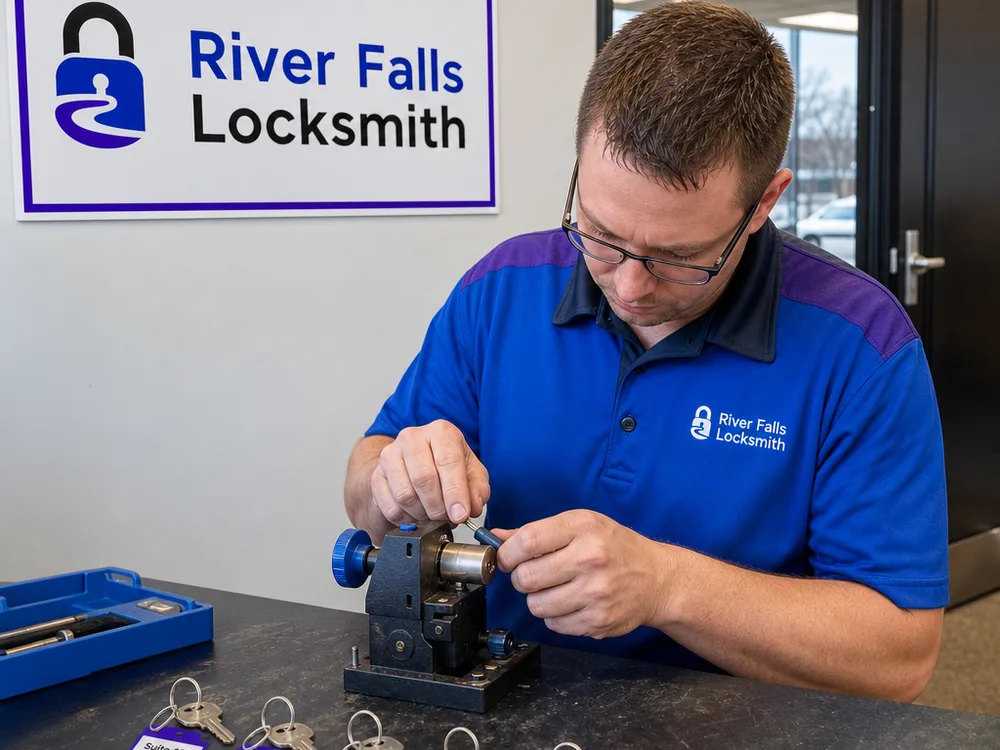
Reset access after employee changes, tenant turnover, or lost keys. Rekeying keeps existing hardware when it is in good condition, while lock replacement makes sense when parts are worn, mismatched, or not code appropriate.
Serving River Falls, Wisconsin & surrounding areas
24/7 Emergency Response
Reliable access control and business security for River Falls facilities, including lock changes, master key systems, and door hardware repairs with clear communication from start to finish.
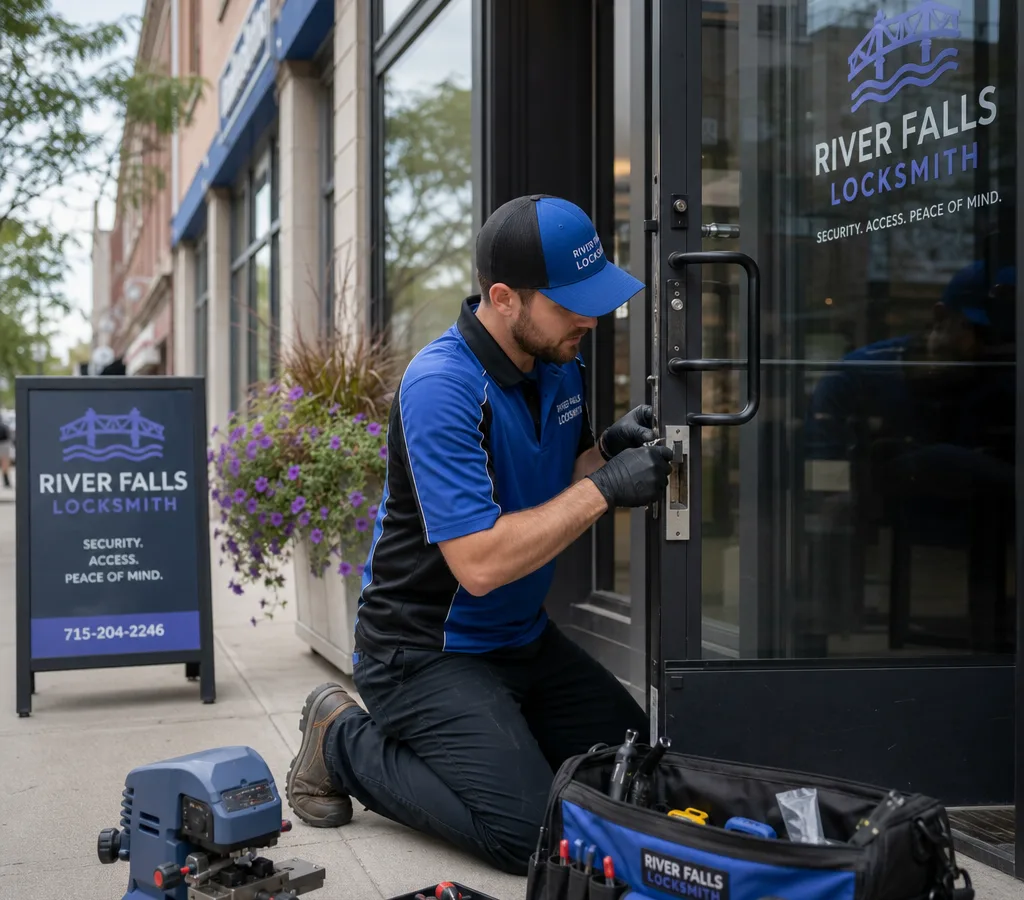
If you searched for a commercial locksmith River Falls WI businesses can rely on, you are likely dealing with one of three problems: keys are circulating beyond who should have them, a door is not latching or closing right, or you need a cleaner way to control who can access specific areas.
River Falls Locksmith works with local businesses and property managers to tighten up day to day access without turning the building into a headache for staff. That can be as simple as rekeying a suite after a turnover, or as structured as building a master key system that keeps tenants, managers, and maintenance on the right access levels.
If you also need a general locksmith in town for non commercial situations, the team at River Falls locksmith service can point you in the right direction while keeping this visit focused on business security and commercial doors.
Reset access after employee changes, tenant turnover, or lost keys. Rekeying keeps existing hardware when it is in good condition, while lock replacement makes sense when parts are worn, mismatched, or not code appropriate.
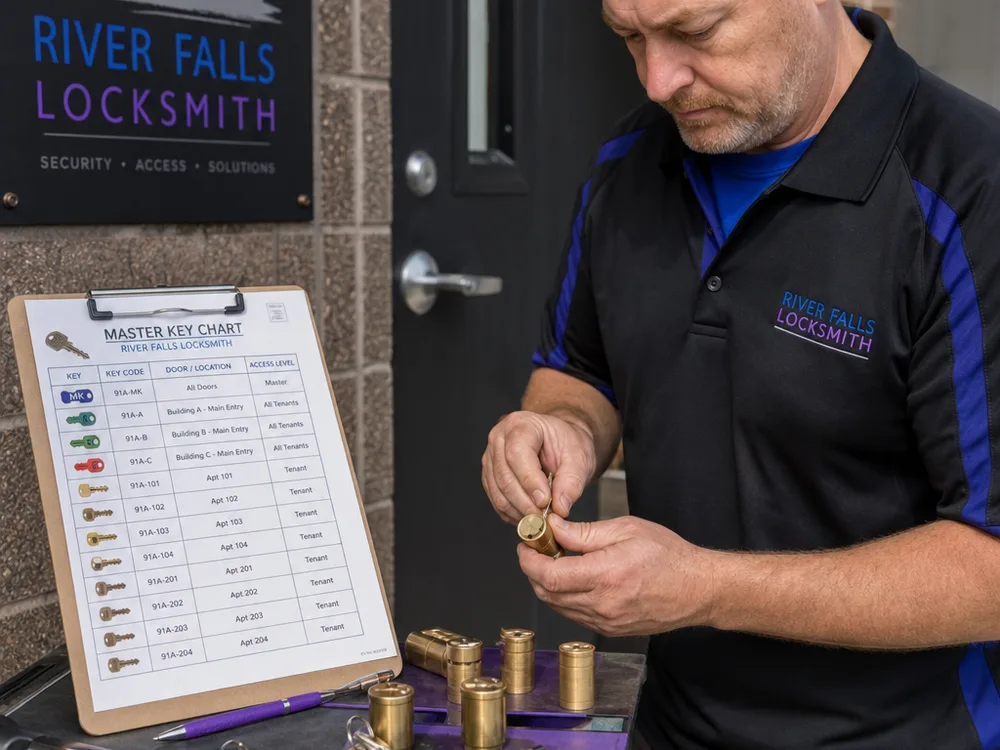
Design key hierarchies that match how your building is managed. Done right, a master system reduces the number of keys in circulation and prevents the “every key opens everything” problem that grows over time.
Fix issues that cause call backs: misaligned latches, loose levers, binding deadbolts, and doors that do not close consistently. Hardware problems are often a door and frame alignment issue, not just a lock issue.
Add key control where duplication is a concern. Restricted systems help you track authorization so keys are not copied at a retail kiosk without approval.
Support for common commercial setups such as aluminum storefront doors, steel doors, and offices with lever sets, deadbolts, and interconnected locksets that meet everyday traffic needs.
Restore access when operations are disrupted. For sensitive areas, expect verification of authority before entry and a plan to re secure the opening after access is restored.
Commercial doors and locks fail in ways residential hardware usually does not. A high use entry can look fine while the latch is barely catching, the closer is out of adjustment, or the strike plate is sitting just a few millimeters off. Those small issues create the familiar cycle of stuck keys, doors that bounce, and staff propping doors open.
We approach it like a system: door alignment, latch engagement, closer and hinge condition, and the lock or cylinder itself. When access control is the driver, we focus on key control and accountability. If a previous employee still has a key, rekeying alone helps, but a restricted keyway or a structured master key plan can keep the problem from returning.
Businesses in River Falls also see a lot of weather swing across the year, and that matters. Temperature and humidity changes can shift how a door sits in its frame, especially on exterior entries. If you have a door that “only acts up” in certain conditions, that clue helps narrow whether the fix is adjustment, hardware replacement, or both.
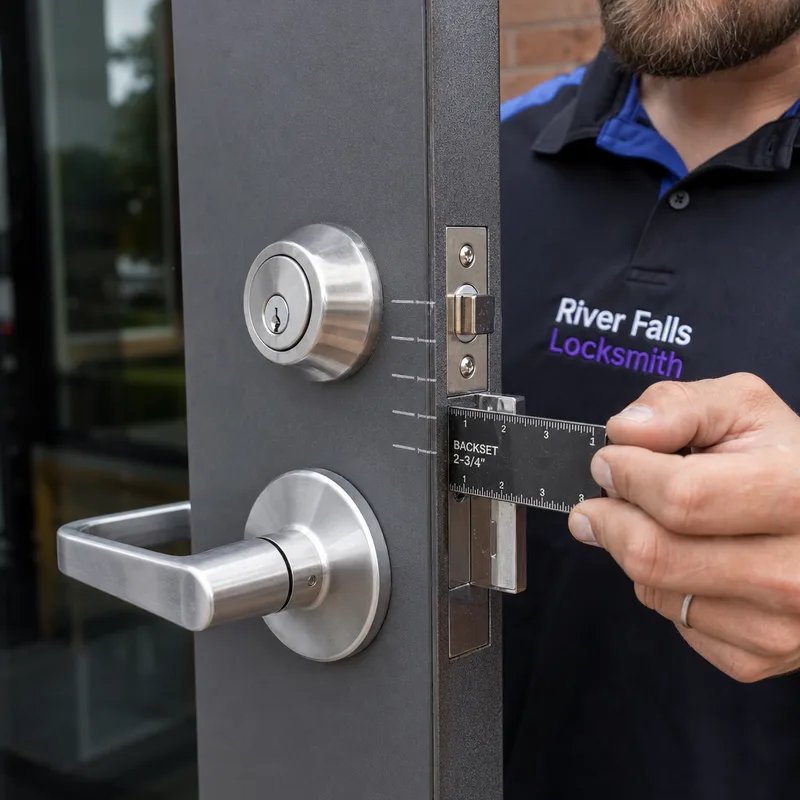
A clear scope, a complete door assessment, practical options, and documented key control keep the work organized.
We confirm who is authorized to approve work and who needs access. For lockouts or sensitive areas, expect identity and authorization verification before entry.
We inspect the door, frame, and hardware, then identify the real failure point. For key control projects, we inventory what is installed now and what needs to change.
You get practical choices: repair vs replacement, rekey vs new hardware, and whether a master key system or restricted keys make sense for your operation.
We complete the approved work and test function the way your staff uses it: repeated cycles, latch engagement, key operation, and closure consistency.
For rekeys and master systems, we document keying where appropriate so future changes do not turn into guesswork, and we review best practices for key control.
We offer competitive pricing for commercial rekeying, hardware adjustments, lockset replacement, multi-door projects, and master key systems.
Your final price depends on how many openings are involved, the type of hardware (cylinders, mortise locks, interconnected sets), key control requirements, and whether the door and frame need alignment or parts replacement. Exact pricing is confirmed after an on site assessment of the doors and existing keying.
Rekeying is usually the fastest way to restore key control when the existing hardware is in good shape. Replacement is a better choice when locks are worn, keys are sticking, the hardware is mismatched across doors, or you want to upgrade to a restricted keyway or a different lock grade.
Yes, a master key system can be set up so managers and maintenance have broader access while tenants or departments only access their own areas. The important part is planning the hierarchy up front so future changes, like adding a new suite or restricting a storage room, can be handled without redoing the entire system.
It is often a door alignment problem, not the cylinder itself. On commercial aluminum doors, small shifts in hinges, closers, or the strike location can make locking difficult, especially when outside conditions change. A proper service visit checks latch engagement and closure first, then repairs or replaces lock parts only if needed.
If your building uses exit devices, they can often be repaired, rekeyed, or upgraded depending on the model and condition. Because life safety hardware has specific installation requirements, the right fix depends on the exact device type and how the door is used, so we start by identifying the hardware and confirming the desired access and egress behavior.
You do not always have to start over. If the current system is organized and the keyway is still available, we can often expand it by keying additional cylinders to fit the existing hierarchy. If the system has grown messy over time or keys have been copied widely, a reset with a new keyway or restricted keys may be the cleaner long term approach.
Have the door count (or at least an estimate), the type of access you want (all staff the same vs separate levels), and any pain points like keys that stick or doors that do not latch. If you manage a multi-tenant property, noting which areas must remain secure during business hours helps plan the work with minimal disruption.
Tell us what you manage in River Falls and what is not working today, and we will recommend a practical path forward, whether that is rekeying, hardware repair, or a master key plan that fits how your business actually runs.